What You Own Is Not Long-Term 2x: Daily Reset, Trend, and Volatility U.S. 2X ETF playbook: understand daily reset, path dependency, volatility drag, and why SSO and QLD are tools for managing trend and volatility.
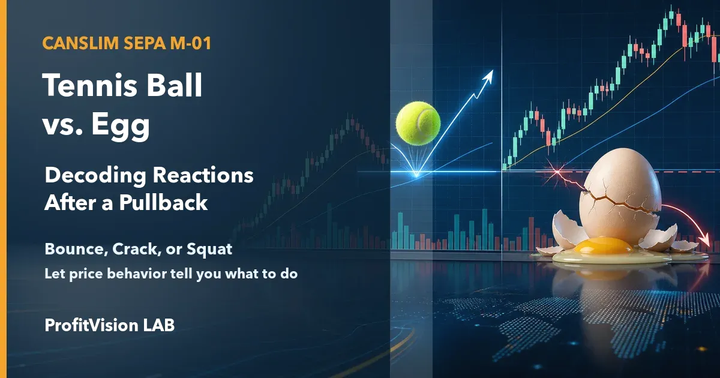
Tennis Ball vs. Egg: Decoding How a Stock Reacts After a Pullback Tennis Ball and Egg behavior are core SEPA position management tools. This article explains Natural Reactions, Tennis Ball Action, Egg behavior, and the Squat pattern so investors can judge whether to hold through a pullback or raise risk controls.
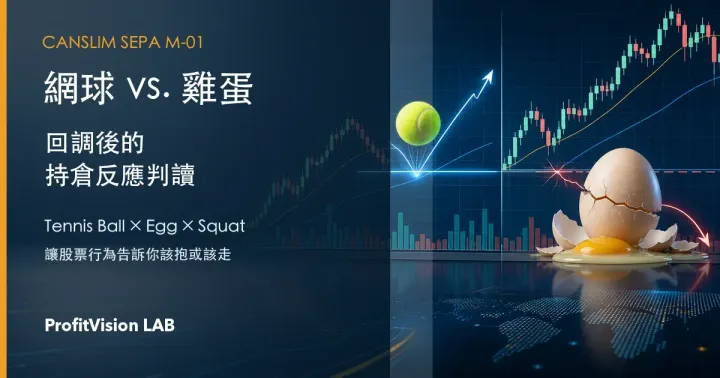
網球 vs. 雞蛋:持倉中股票回調後的兩種反應解碼 網球彈跳與雞蛋行為是 SEPA 持倉管理的核心判讀框架。本文解析自然反應、Tennis Ball Action、Egg 行為與 Squat,幫助投資人判斷回調後該續抱或提高警覺。
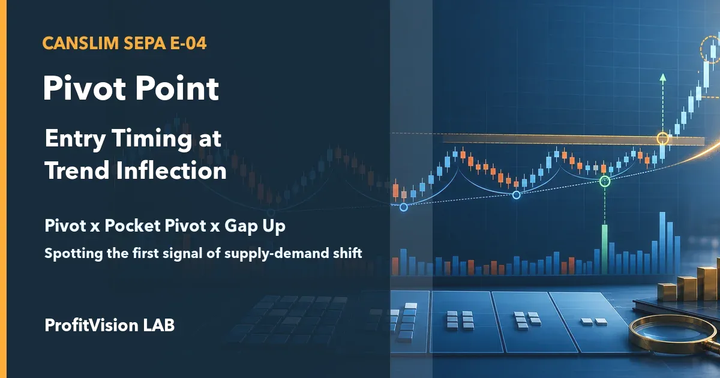
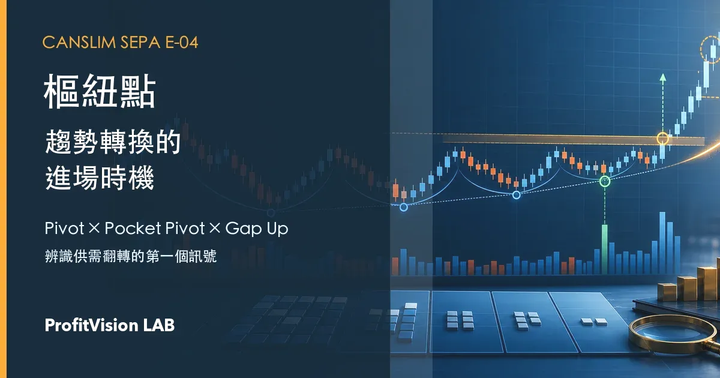
Pivot Point & Pocket Pivot Point: Entry Timing at Trend Inflection Pivot Point and Pocket Pivot Point are core SEPA entry tools. This article explains how Pivot Point, Pocket Pivot Point, and Gap Up Entry identify supply-demand shifts and entry timing after a completed VCP base.
樞紐點與口袋樞紐點:趨勢轉換的進場時機解析 樞紐點與口袋樞紐點是 SEPA 進場工具的核心。本文解析 Pivot Point、Pocket Pivot Point 與 Gap Up Entry 如何辨識 VCP 完成後的供需翻轉與最佳進場時機。
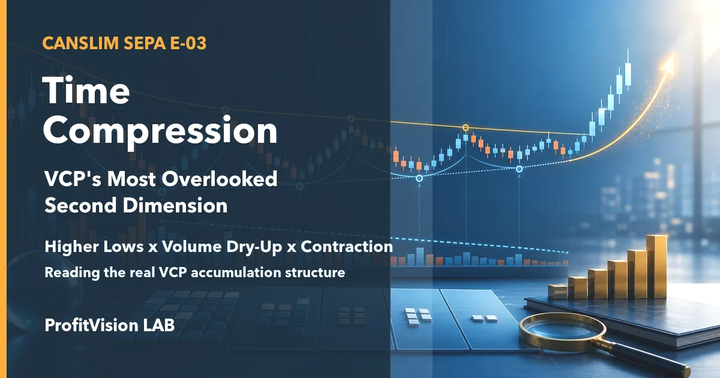
Time Compression: VCP's Most Overlooked Second Dimension Time compression is the overlooked second dimension of VCP patterns. This article explains how higher lows, tightening pullbacks, shorter contractions, and volume dry-up reveal the real SEPA accumulation structure before breakout.