Define the risk first. Then choose the trade.
From CANSLIM × SEPA stock selection, options strategy, position building and management to trading psychology — this page is the complete map of the PVL trading system, and every section links to real, readable work.
From CANSLIM × SEPA stock selection, options strategy, position building and management to trading psychology — this page is the complete map of the PVL trading system, and every section links to real, readable work.
Stock Engine: CANSLIM × SEPA × VCP
Ask "should I touch this at all" first. From the seven CANSLIM letters and SEPA’s five pillars to VCP contraction patterns — stock picking becomes a checkable process, not inspiration.
All trading-system articles →
Power Play: Tight Consolidation and Re-Entry After Doubling in 8 Weeks
A faithful guide to Minervini's Power Play: a 100%+ move in under 8 weeks, a shallow <=20% consolidation with Tight Closes and volume dry-up, and re-entry only after a pivot breakout or Follow-up Buy Point.
CANSLIM × SEPA Learning Map: From Stock Selection to Position Management
CANSLIM defines which high-quality growth stocks deserve attention. SEPA defines when to enter, how to manage risk, and how those stocks can become candidates for stock trading and options-selling strategies.
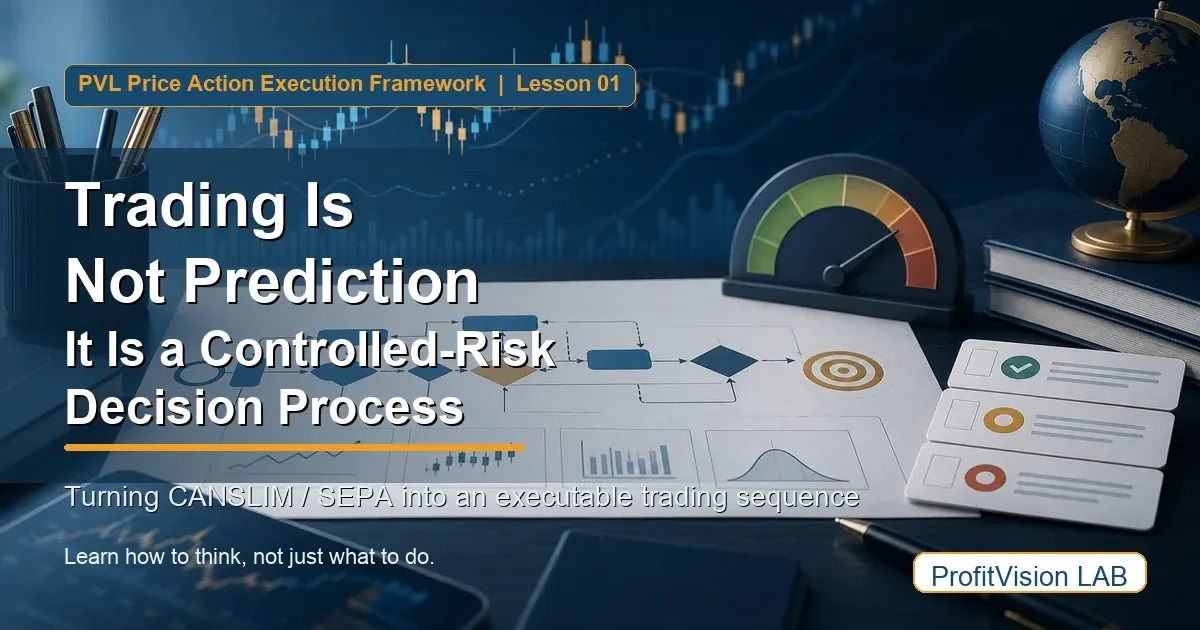
PVL Price Action Execution Framework: Trading Is Not Prediction
Lesson 01 of the PVL Price Action Execution Framework explains how CANSLIM and SEPA tools, from Stage 2 and VCP to Pivot Point, 1 RU, Confirmation and Sell Rules, become a repeatable trading decision process.
Options Strategy
Sell puts, covered calls, bull put spreads, PMCC — stand on the seller’s side, trading probability edge and pre-defined max loss for repeatable cash flow.
All options articles →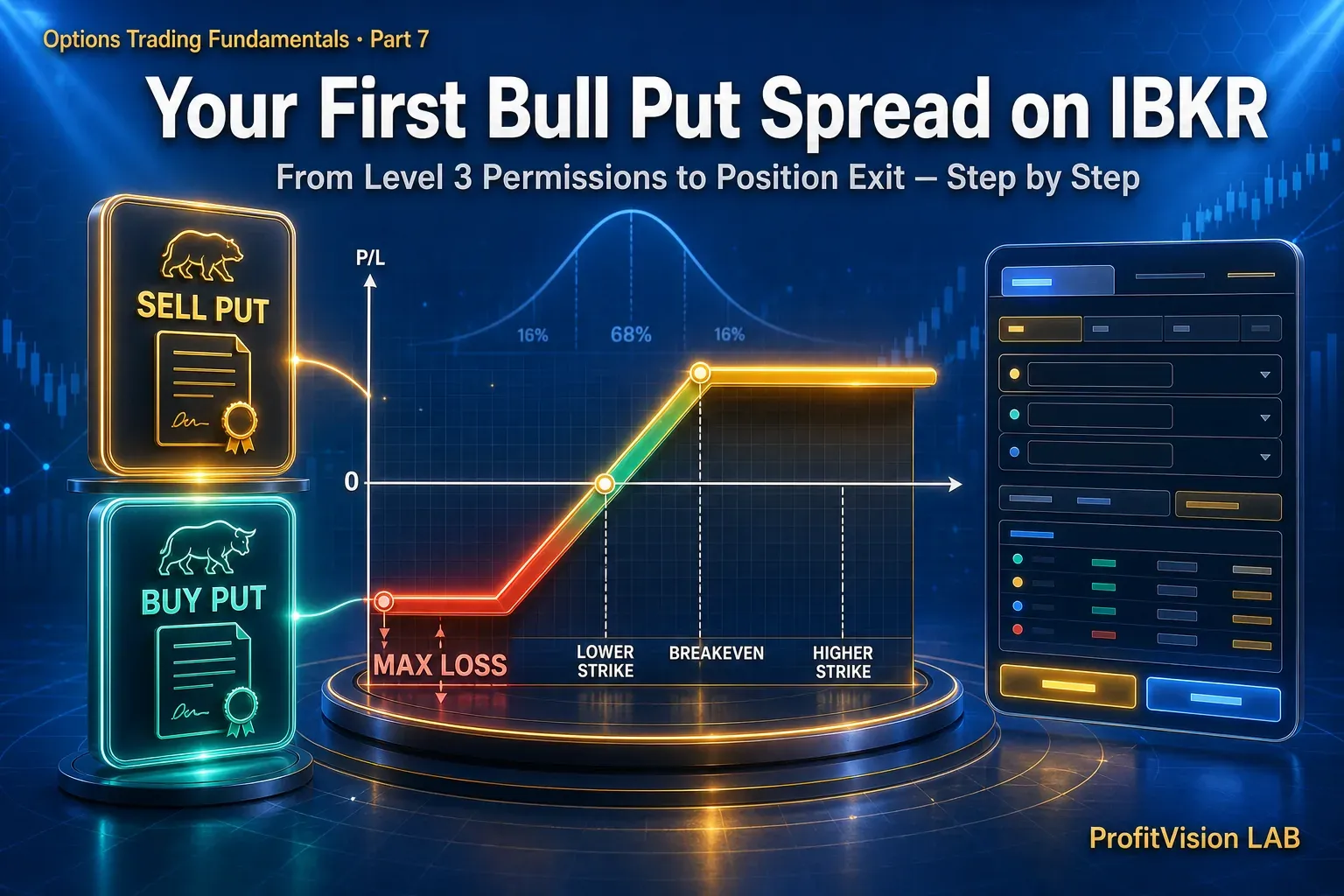
Your First Bull Put Spread on IBKR: From Level 3 Permissions to Position Exit
Bull Put Spread is the ideal first strategy for options sellers: maximum loss is locked in before entry, margin requirements are low, and the logic is clean. This guide walks through every step on IBKR — from applying for Level 3 permissions to placing a Combo order and setting your 50% profit exit.
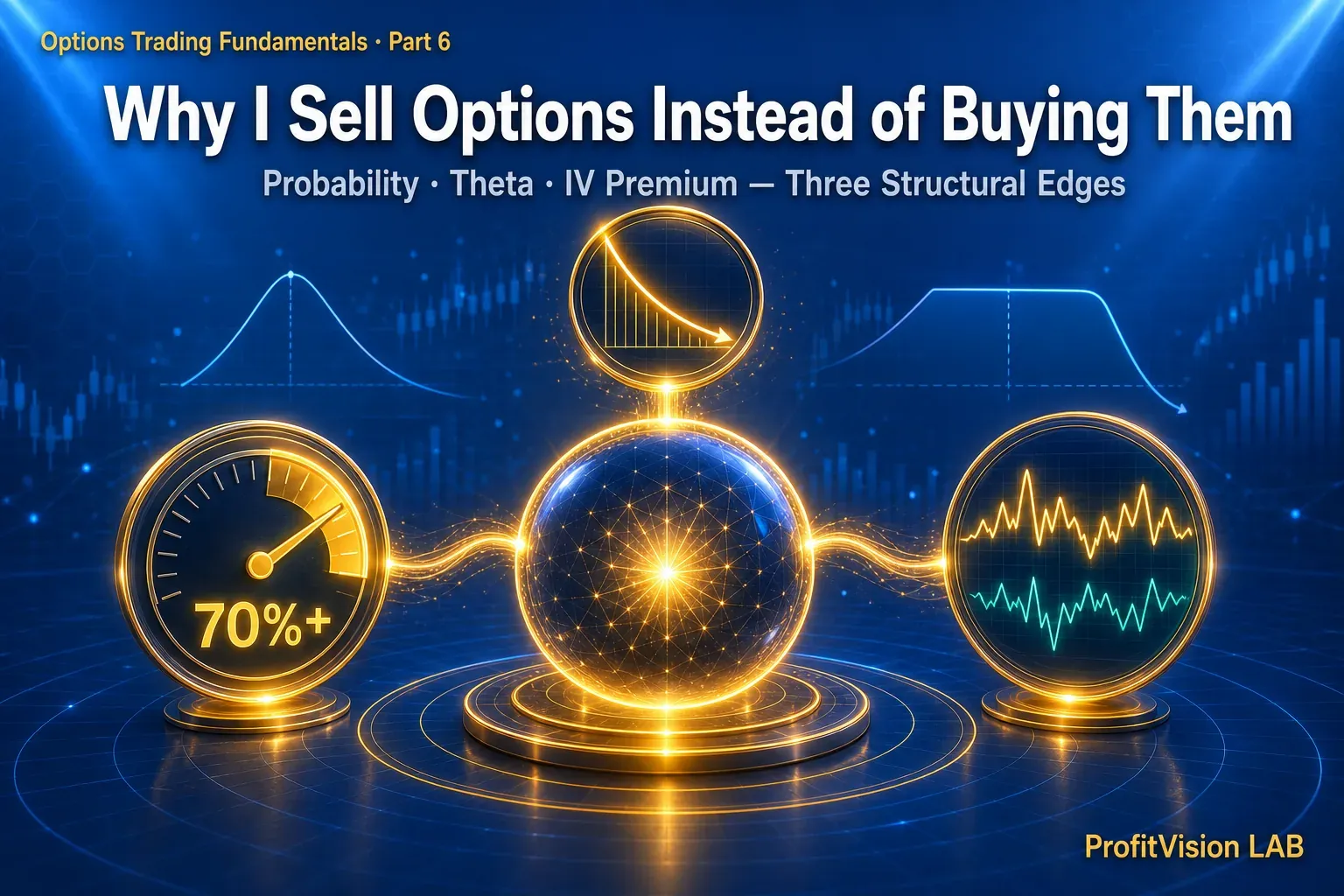
Why I Sell Options Instead of Buying Them: Probability, Theta & IV Premium
Over 70% of options expire worthless — the market structurally favors sellers via three edges: probability, daily Theta decay, and the IV premium in every contract. This article explains why selling beats buying on a statistical level, and what that means for your trading system.

Delta, Theta, IV & Gamma: The Options Greeks Every Seller Needs to Know
Four Greek letters determine the behavior of every options position: Delta selects your strike, Theta earns you daily income, IV Rank times your entry, and Gamma signals when to exit. This guide explains each one through the lens of the options seller — concise, precise, and immediately actionable.
Position Building & Management
Add only when right; leave when wrong. Pyramid sizing, the 1 RU risk unit and three-stage systematic building — position size is a rule, not a feeling.
More on position management →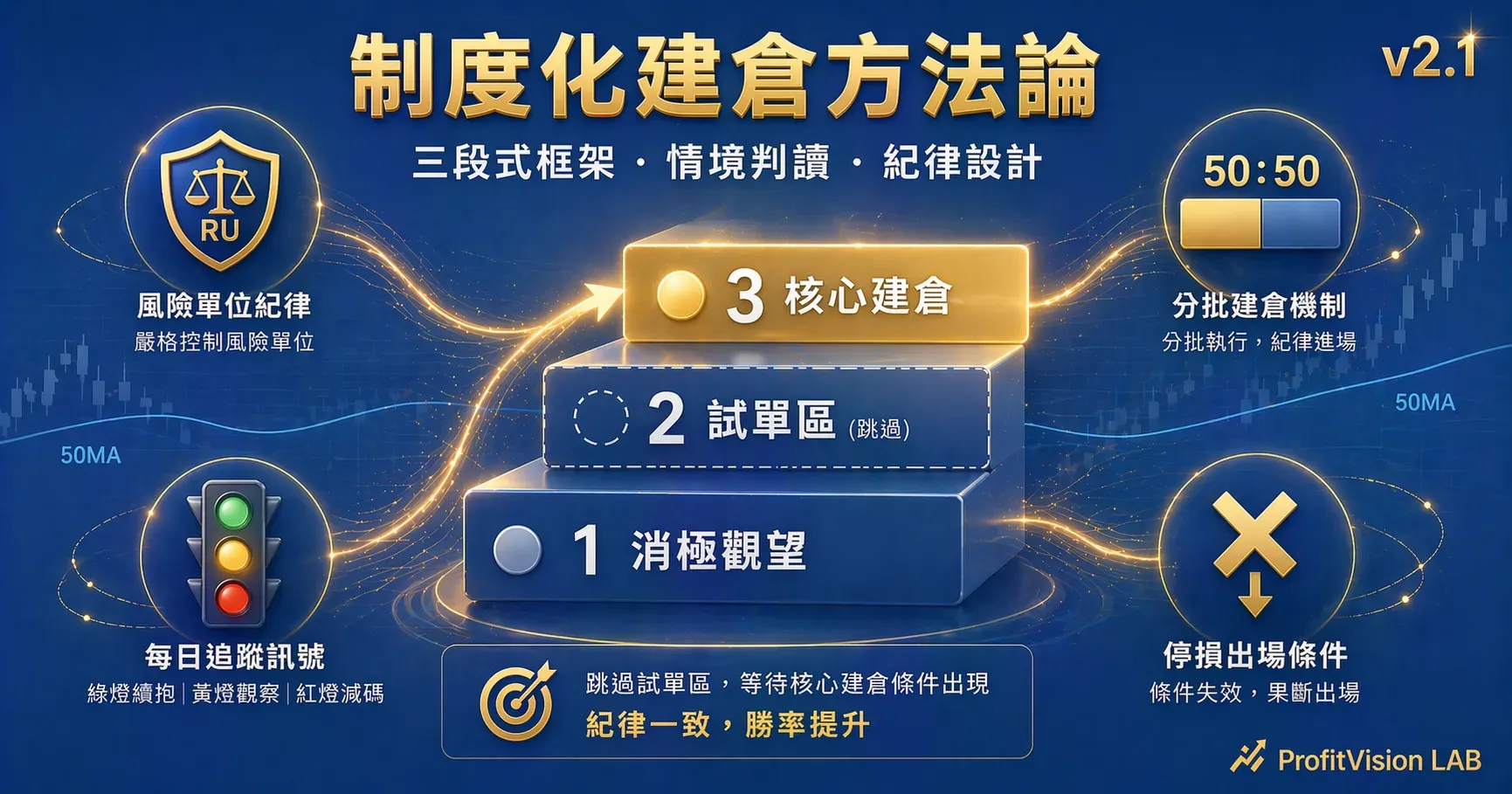
[Trading System] NOW Systematic Position-Building Framework v2.1: Reading the Setup and Designing the Methodology Under the Three-Stage Framework
A general methodology framework for NOW's upgrade from cautious watching to a Stage 3 core position-building determination. When a selling climax, an accumulation prelude, and fundamentals validation stack together, how do you apply the Three-Stage Framework, how do you address the short-term noise of a Q2 cRPO guide of 19% and Adj OM guide of 26.5%, and how do you design tranche entries and stop conditions under your own risk-management rules. All specific position sizes, entry prices, and stop-loss levels are for each investor to decide.

A Trading Beginner's Guide: From "Greed" to "Risk Management" — Learning the Pyramid Position-Sizing Mindset of Professional Traders
You think adding to a position is greed? For true professional traders, adding to a position is risk management. The pyramid position-sizing method shared by Livermore, Darvas, and O'Neil comes down to one rule: only commit more capital once the market has proven you right. This article breaks down the full three-phase logic, showing you how to replace prediction with structure.

ServiceNow Position Transformation: Put to Stock to Covered Call to LEAPS
A deep-dive case study on managing a ServiceNow NOW position that evolved from CSP to stock to CC to LEAPS.
Trading Psychology
The last piece of any system is the person executing it. Stop-loss psychology, the wisdom of not trading, the seller’s philosophy — decision quality stops depending on the mood of the moment.
All psychology articles →
Don't Dwell in a Chaotic State: Choosing the Right Market Is Risk Management's First Move
Chinese stock discounts aren't a bargain — they're rational risk pricing. From golden share veto rights to the 2021 crash and 2026 cross-border broker crackdown, Shiba the Disciplined breaks down why market selection is the true first step in risk management.
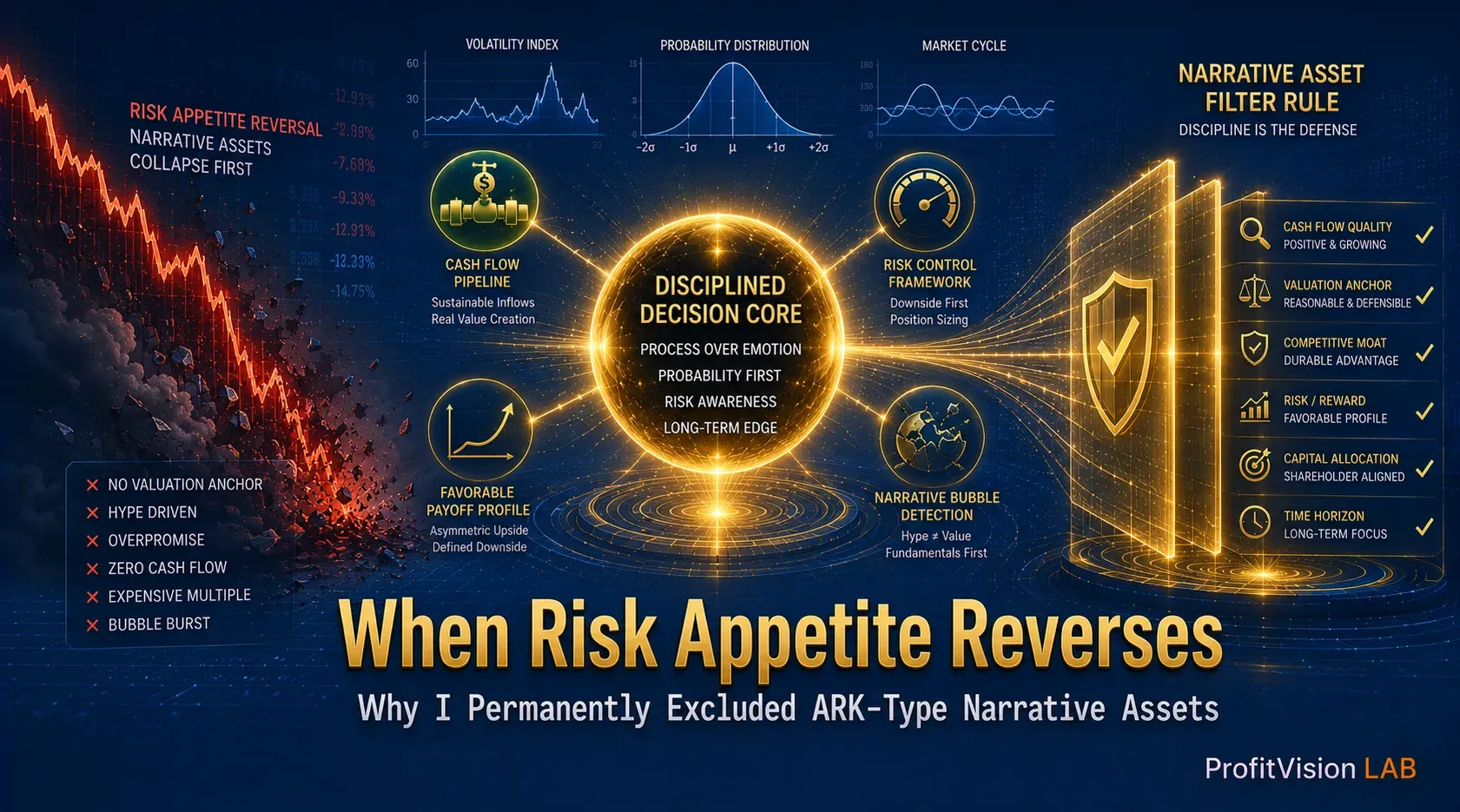
When Risk Appetite Reverses: Why I Permanently Excluded ARK-Type Narrative Assets
Some losses erode more than capital — they erode judgment and discipline. My 2020–22 ARK losses became the catalyst for a probability-based options-seller system. The Narrative Asset Filter permanently excludes assets that are valuation-opaque, cash-flow-free, and narrative-dependent.

Why I Chose the Options Sell Side: A Lifetime Framework, Not a Technique
The options seller doesn't predict markets — they price and manage uncertainty. A guide to the sell-side philosophy: probability edge, Theta psychology, mark-to-market vs. margin discipline, black swan protocol, and the pre-trade checklist. A lifetime framework, not a technique.
Allocation & Hedge
Beyond trading, one more line of defense
Rebalancing, cross-asset hedging, ETF allocation and DCA — the system controls single-trade risk; allocation absorbs portfolio risk. Full coverage lives in the Asset Allocation desk.
The Four Hard Rules
5% Risk Unit
Define the maximum acceptable loss before every trade, so no single mistake can break the account.
The Four-Layer Defensive Screen comes before strategy
If the underlying fails the screen, no premium is attractive enough to be an opportunity.
Invalidation is written before entry
Price, fundamental and time conditions are set before emotions show up.
Review fixes the model, not the memory
Keep the original assumptions and evidence, so you know whether judgment or execution failed.